
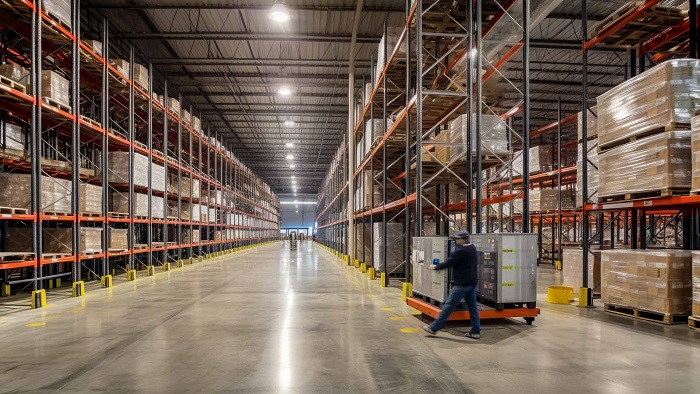

For decades, modern supply chain networks were engineered around an unavoidable geographic compromise. National retailers and manufacturers clustered their largest storage facilities near deepwater ports or within sprawling logistics hubs adjacent to primary metropolitan markets like New York, Chicago, and Los Angeles. In that centralized paradigm, secondary cities, mid-sized industrial corridors, and rural territories were treated as logistical afterthoughts. Deliveries to these peripheral markets routinely suffered from multi-day transit delays, inflated shipping surcharges, and chronic inventory stockouts.
That operational model is no longer tenable. Today, commercial buyers and individual consumers in secondary markets like Boise, Omaha, or the Lehigh Valley expect the same product availability and fulfillment velocity as those in major metropolitan centers. Meeting this expectation has forced a fundamental transformation in freight architecture. At the center of this evolution is the regional distribution center, an asset that has transitioned from a passive warehouse into an active engine of regional economic accessibility.
Decentralizing the Supply Chain: From Centralized Hubs to Regional Nodes
The traditional supply chain model relied heavily on a handful of centralized mega-facilities designed to maximize economies of scale. While consolidating goods under one massive roof kept real estate and overhead expenses relatively low, it created vast physical distances between inventory and the end customer. Over long transit corridors, shipping freight via less-than-truckload shipments or multi-zone parcel networks resulted in compounded transit times and elevated fuel expenditures.
To solve this friction, forward-thinking logistics networks have shifted toward a decentralized, node-based framework. By establishing regional distribution centers located within a 150- to 250-mile radius of key regional clusters, enterprises effectively collapse the distance between production and consumption.
This geographic proximity dramatically shortens the middle mile—the critical freight leg that connects primary manufacturing hubs to localized distribution points. When inventory sits already positioned inside the target geographic territory, the logistical hurdle of reaching underserved populations disappears. What once required a four-day cross-country haul becomes a reliable next-day or same-day fulfillment run, placing regional buyers on equal operational footing with their urban counterparts.
Transforming Static Storage into Dynamic Velocity
A common misconception is that a distribution center is simply an expanded warehouse where pallets collect dust until an order trickles in. In reality, modern regional distribution centers operate as precision sorting engines designed to keep freight moving continuously.
Cross-Docking and Rapid Deconsolidation
One of the most powerful mechanisms for expanding regional access is cross-docking. Inbound full truckloads or intermodal containers arrive from domestic manufacturing plants, where dock operators immediately unload, sort, and transfer the cargo directly to outbound regional delivery trucks with minimal or no intermediate storage.
This practice eliminates the capital-intensive holding phase entirely. High-demand goods—ranging from consumer electronics and automotive parts to seasonal retail inventory—flow through the facility in hours rather than weeks. By stripping out warehouse dwell time, regional distribution centers allow local merchants and branch facilities to maintain lean inventories without risking sudden stock depletion.
Forward-Deployed Inventory and Demand Staging
Consumer and commercial demand patterns are rarely uniform across the country. A distribution center serving the agricultural Midwest requires an entirely different seasonal inventory mix than a facility serving coastal Florida or the Pacific Northwest.
Advanced regional distribution centers leverage localized enterprise data to forward-deploy high-velocity inventory tailored to regional consumption patterns. By anticipating regional spikes—whether driven by local manufacturing cycles, weather patterns, or municipal projects—distribution managers can position critical supplies ahead of demand. This eliminates the need for emergency, high-cost expedited freight runs and ensures that essential products remain accessible regardless of broader national supply volatility.
Mitigating the Final-Mile Cost Penalty
The final mile represents the single most expensive and inefficient phase of the entire logistics journey, often consuming up to half of total shipping expenditures. In secondary and rural markets, this dynamic is amplified by lower population density and greater driving distances between drop-offs. When drivers must travel extended distances between deliveries, delivery density drops, deadhead mileage climbs, and carrier costs surge.
Regional distribution centers counteract this structural penalty through freight consolidation. By moving massive, consolidated volumes deep into a region via efficient line-haul trucking before breaking shipments down into route-optimized parcels, businesses minimize the total vehicle miles traveled on local roadways.
This reduction in final-mile friction delivers substantial cost benefits down the commercial chain. Local businesses that once had to absorb punitive regional shipping fees can access national supply networks at competitive freight rates. As delivery economics stabilize, regional merchants can maintain lower shelf prices, improve their working margins, and offer dependable fulfillment guarantees that rival national competitors.
Strengthening Operational Resilience Across Critical Sectors
Beyond consumer retail convenience, regional distribution centers provide essential structural resilience for foundational industries, including healthcare, industrial manufacturing, and civil infrastructure.
Consider the medical sector. Hospitals, outpatient clinics, and regional pharmacies cannot wait several days for life-saving therapeutics, specialized surgical hardware, or emergency diagnostic reagents. Regional healthcare distribution centers maintain temperature-monitored cold-chain infrastructure and clinical safety stock within rapid driving range of regional healthcare systems, safeguarding patient care against sudden transit disruptions.
Similarly, regional industrial operations rely on distribution centers to support just-in-time maintenance, repair, and operations (MRO) networks. When a processing plant or municipal water facility experiences an unexpected equipment breakdown, waiting forty-eight hours for a replacement motor or custom hydraulic valve can cost tens of thousands of dollars in lost productivity. A nearby distribution center holding critical mechanical components ensures that critical infrastructure returns to full operation within hours.
Catalyzing Secondary Economic Development
The strategic placement of distribution centers also produces significant secondary economic benefits for the host communities. Establishing a distribution facility in a secondary or tertiary market brings direct private capital investment into local road infrastructure, power grid capacity, and commercial logistics parks.
Moreover, these facilities generate diverse, multi-tiered employment opportunities. The modern distribution center is no longer driven purely by manual material handling; it requires industrial automation technicians, logistics data analysts, facility directors, and fleet dispatch coordinators.
The presence of a major distribution node frequently attracts complementary businesses, including third-party logistics firms, maintenance contractors, regional carriers, and commercial packaging providers. This virtuous cycle turns previously overlooked geographical corridors into dynamic commercial freight hubs that anchor regional economic stability.
Building an Equitable Fulfillment Landscape
In an economy shaped by rapid digital transactions and heightened service expectations, geographic location should not determine access to essential commercial goods. Businesses and consumers located outside tier-one urban metros require reliable, cost-effective access to the global supply chain to remain competitive and economically vibrant.
Modern regional distribution centers bridge this gap. By decentralizing inventory, streamlining middle-mile and final-mile transport, and providing robust operational redundancy, these facilities remove the traditional penalties of distance. Ultimately, investing in strategic regional distribution networks is not just a tactical logistics decision; it is a vital strategy for building a more resilient, accessible, and balanced economy.

Comments are closed.