

Introduction
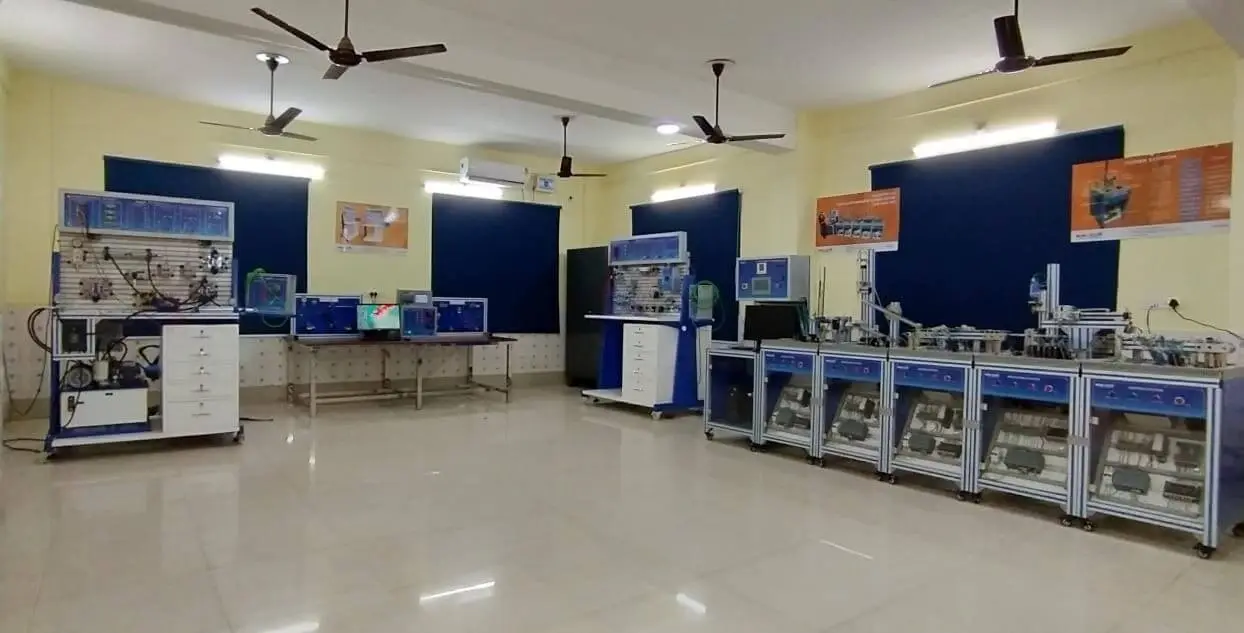
In the evolving landscape of advanced manufacturing, modular manufacturing systems are transforming how factories operate, adapt, and grow. Unlike traditional fixed assembly lines, modular systems introduce reconfigurable, scalable, and intelligent modules that can be independently replaced or rearranged. This concept is revolutionizing the manufacturing industry, especially within smart factories and Industry 4.0 ecosystems, by merging flexibility, efficiency, and innovation.
What Defines Modular Manufacturing?
At its core, modular manufacturing involves dividing a production process into independent yet interconnected units, or modules. Each module performs a distinct operation and can be easily interchanged or upgraded. This modular structure allows rapid reconfiguration based on production needs without disrupting the entire line.
Key characteristics include:
-
Standardized interfaces for mechanical, electrical, and software connections
-
Plug-and-produce functionality enabling seamless module replacement
-
Scalable architecture to increase or reduce capacity as needed
-
Reconfigurable workflows that adapt to changing product demands
Such adaptability makes modular systems a cornerstone of next-generation manufacturing — especially where speed, customization, and innovation drive competitiveness.
The Rising Importance of Modular Systems
Agility and Market Responsiveness
Modern markets are volatile, with frequent shifts in consumer demand and product lifecycles. Modular manufacturing enables swift adaptation by allowing specific production modules to be scaled or replicated for new product variants. This means manufacturers can pivot faster than ever without the need for complete line overhauls.
Capital Efficiency and Reduced Risk
Traditional manufacturing lines require substantial capital investment and long payback periods. Modular systems enable incremental scaling — starting small, then expanding as profitability grows. Modules can be repurposed for new lines or products, dramatically reducing the risk of stranded assets and obsolete equipment.
Future-Proof Technology Integration
With modular manufacturing, new technologies — such as robotic automation, machine vision, or AI-based quality control — can be integrated seamlessly. Since modules are self-contained, upgrades can occur without redesigning the entire system, aligning perfectly with smart factory digital transformation goals.
Enhanced Customization
Consumer preference for personalized products has increased exponentially. Modular systems make mass customization practical by enabling flexible production of multiple variants within the same line, minimizing downtime and maximizing throughput.
Core Enablers of Modular Manufacturing Systems
1. Digital Twin Technology
Digital twins replicate physical modules virtually, allowing simulation and optimization before implementation. Manufacturers can predict bottlenecks, validate configurations, and ensure seamless system performance before physical changes occur.
2. Standardized Mechanical and Digital Interfaces
Uniformity in connection points — for power, data, and control systems — ensures true plug-and-produce functionality. These standards simplify module swapping and maintain system consistency across suppliers and equipment generations.
3. Smart Software Architecture
Modern modular systems rely on adaptive control software capable of recognizing new modules automatically and adjusting workflows in real time. This enables rapid reconfiguration with minimal human intervention, increasing uptime and efficiency.
4. Data Connectivity and Industrial IoT
Each module acts as a smart data node equipped with sensors for performance monitoring. Connected through the Industrial Internet of Things (IIoT), these nodes enable predictive maintenance, data-driven optimization, and enhanced traceability across the entire operation.
5. Modular Logistics and Supply Chain Integration
For modular systems to perform optimally, logistics and material flow must also be modular. This includes modular feeders, conveyors, and packaging systems that synchronize seamlessly with production modules, ensuring uninterrupted workflow during reconfiguration.
Implementation Strategy for Modular Manufacturing
Step 1: Define the Modular Framework
Start by mapping which processes require flexibility versus stability. Define module boundaries — such as machining, assembly, inspection, or packaging — and design standardized connection points for both hardware and software integration.
Step 2: Develop and Validate Pilot Modules
Begin with a pilot project comprising a few reconfigurable modules. Test their interoperability, communication efficiency, and changeover times. The pilot will reveal potential gaps in design and help fine-tune the interface standards before full-scale deployment.
Step 3: Integrate with Smart Factory Systems
Once the pilot succeeds, expand modular integration across production lines. Connect modules to Manufacturing Execution Systems (MES), digital twin platforms, and cloud-based analytics to establish a unified ecosystem. Real-time data visibility becomes crucial for maintaining agility.
Step 4: Enable Continuous Reconfiguration
A truly modular factory evolves continuously. Use simulation and AI-driven scheduling to plan reconfigurations proactively. Optimize module utilization, production sequence, and energy consumption for sustainable efficiency.
Key Performance Indicators (KPIs)
To measure the effectiveness of modular manufacturing, manufacturers should track performance metrics such as:
-
Module changeover time: The duration required to replace or rearrange modules.
-
Overall equipment effectiveness (OEE): Reflects productivity and utilization.
-
Time-to-market: Speed of adapting production lines for new products.
-
Reusability index: Frequency and efficiency of module repurposing.
-
Downtime frequency: Reduced unplanned stoppages indicate modular resilience.
-
Energy and resource efficiency: Optimized through modular automation.
Addressing Common Challenges
Integrating Legacy Systems
Legacy machinery often lacks modular interfaces. Retrofitting with IoT sensors, standardized controllers, and digital adapters can extend the life of existing assets, ensuring they fit into a modular ecosystem without major replacement costs.
Vendor Standardization
Different equipment suppliers may use proprietary systems. Creating company-wide modular standards for mechanical and digital connections ensures cross-compatibility and protects against vendor lock-in.
Software Complexity and Cybersecurity
Dynamic module configurations demand sophisticated control systems that maintain safety and security. Implement modular, service-oriented architectures with strong encryption and authentication layers to ensure data and operational safety.
Workforce Readiness
Technicians and engineers must adapt to modular environments. Training programs should emphasize system integration, digital tools, and real-time diagnostics. Upskilled operators can handle reconfiguration tasks independently, boosting operational autonomy.
The Future of Modular Manufacturing in Industry 5.0
The next era — Industry 5.0 — focuses on human-centric, sustainable, and intelligent manufacturing. Modular systems will play a central role by enabling hybrid environments where humans and robots collaborate effectively.
Future developments include:
-
Human-robot co-working modules that merge flexibility with safety.
-
AI-driven predictive control for module scheduling and maintenance.
-
Circular manufacturing models where modules are reused, refurbished, and redeployed to new facilities.
-
Energy-efficient modules powered by renewable energy and smart grids.
In Industry 5.0, modular systems will empower manufacturers to achieve high customization without compromising environmental or operational sustainability.
Conclusion
Modular manufacturing represents a paradigm shift — from rigid, capital-heavy production systems to agile, intelligent ecosystems capable of evolving with market demands. It not only enhances flexibility and scalability but also future-proofs factories for technological evolution. As industries transition toward smart, sustainable, and human-centered production, modular systems will serve as the foundation of global manufacturing excellence.
FAQs
1. How does modular manufacturing differ from traditional automation?
Traditional automation relies on fixed setups, while modular manufacturing introduces reconfigurable units that allow easy adaptation to new products or volumes.
2. What industries benefit most from modular systems?
Automotive, electronics, pharmaceuticals, and aerospace sectors benefit most due to their high product variability and complex assembly needs.
3. Can modular systems integrate with existing legacy equipment?
Yes. With retrofitting and standardized interfaces, older machines can become compatible with modular architectures.
4. How do modular systems improve sustainability?
They reduce waste, extend machine lifecycles, and enable energy-efficient operations through optimized, flexible use of resources.
5. What role does AI play in modular manufacturing?
AI enhances predictive maintenance, optimizes production scheduling, and enables adaptive control systems that respond dynamically to real-time data.
6. How long does it take to implement a modular manufacturing system?
Implementation time depends on complexity and scale, but most manufacturers begin with pilot lines that evolve into full modular setups within 12–24 months.
7. What is the next evolution after modular manufacturing?
The next stage integrates human intelligence with AI-driven modular ecosystems under Industry 5.0 — focusing on customization, collaboration, and sustainability.

Comments are closed.